

Amen
Looking around in the synagogue, the kohanim/descendants of Aaron the High Priest, each have the tallit/prayer shawl over their heads and the rest have the tallit draped over their shoulders. It is time for the priestly blessing and there is an anticipating silence. In Israel it is performed every day. The kohanim chants the sacred words from the time of Aaron and the congregation eagerly answers “Amen”. 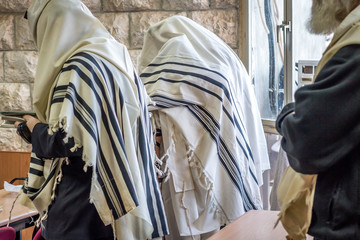
This word “amen” is said so often in the synagogue service, one might think it is not necessary to say it so many times. The opposite is true. Amen, a three letter word in Hebrew, אמן, is a very important word in Judaism, this single word, so simple, but very powerful .
“The Hebrew language unlocks the secret of the universe. So many people around the world say “Amen”. So few people know what it actually means. “Amen” is a Hebrew word and is the root of “Emunah”, which means faith.” – Jeremy Gimpel.
Amen is also an acronym of Al Melech Ne’eman, meaning God trustworthy King. Hassidut talks about “Amenim” – those who say amen. It explains that those who say amen when hearing a blessing, will be protected by God. It is said that by saying “amen” to somebody’s blessing, we create a guarding angel for ourselves. In fact, amen has the same numerical value, 91, as angel. No wonder we are taught to say for example, blessings over food out loud, so there will be somebody nearby to answer “amen.” – The Shulhan Aruch even promises: “Teach a child to say amen. Once a child says amen, he has a portion in the World to Come.”
Esther Stern has a story in her book “Just One Word”. It happened to Rabbi Moshe Friedman in Israel. He was chosen to accompany a very sick person from his community who needed to travel to a special hospital in New York for surgery. The surgery was scheduled for Monday morning, but they had to be in the hospital already on Friday afternoon. The rabbi was equipped with what they needed for Shabbat.

As the hours passed, the sun was going down and it was time for the Shabbat prayers. The rabbi started to sing Lecha Dodi, welcoming the Shabbat queen. They continued with Shalom Aleichem and Aishet Chail/ a song praising Jewish women everywhere, by King Salomon. If not for her, where would we be? We would have no home, no family, there would be no Jewish people. Both men were missing their families in Israel. He poured the wine and said the blessing over it. They suddenly heard the sound of squeaking wheels. An elderly women with wrinkled features and thin, graying hair was wheeled on a bed into the room and parked next to the rabbi and the sick man. The lady was alone and she had difficulty breathing.
When she saw the two men with yarmulkes/kippot on their heads, she lifted her hand and made a wink with her hand for the rabbi to come to her. When he stood next to her, she whispered: “Gut Shabbos”. The rabbi was very surprised, but answered, “Gut Shabbos, may you feel better soon. May the Shabbos bring along a recovery for you.” The Jewish woman had miraculously been placed next to the two, only Jews in the hospital. The sick man next to the old woman said ” Rabbi Moshe, make Kiddush for her also. I am sure she hasn’t heard Kiddush yet.” The rabbi approached the woman and asked “Can I do Kiddush for you?” The woman smiled and gladly accepted. She listened closely while the rabbi recited Kiddush over the wine. When he finished she said in as loud voice as she could “Amen”. Such a hearty amen the rabbi hadn’t heard, and from such a sick woman. She again gestured to the rabbi to come closer and she whispered, using her last energy. “Fifty years have gone since I heard a Kiddush last.” She told him she was born in Poland and after the war she emigrated to America, but has not lived a religious life. She repeated as in a trance “It’s been fifty years since I last answered Amen.”
The rabbi felt privileged to have been able to make Kiddush for this woman and give her a chance of saying Amen after so many years. He was even more moved when an hour later he discovered that the woman had passed away. He thought to himself: Ribbono shel Olam, I have traveled seven-thousand miles in order for a woman to answer Amen with all her strength. Is this what she needed to do, one hour before moving on to the next world?
Indeed, our sages say: One who answers Amen with all his strength, to someone saying a blessing, the gates of Gan Eden are opened to him. We are connecting with the true source. The Talmud also says that answering “amen” is greater than reciting the blessing itself . Amen can be compared to a royal seal, stamped at the end of a king’s letter. Without the seal, it is incomplete.
Moshe Gertner of Bnei Brak z”l, was a God-fearing Jew, especially particular about amen after a blessing. He used to say “Remember, every amen we answer, brings down a shower of blessings on Israel.”
– We might think אמן /amen is a small and unimportant word, but it might well be the most important word we have